We Grow Community has a clear mission: To create an empowered community of advocates who restore and care for nature.
We chat with We Grow Community’s founder, Aleisha Keating, about community-based nature restoration and the amazing ripple effects she has witnessed when people join them to get their hands dirty.
Aleisha, can you share with us a moment or experience that made you realise there was a need for We Grow Community?
The idea came to me gradually while I was involved in running community hands on nature restoration days. I could see the incredible impact that planting trees, watching them grow and being part of something meaningful had on people. I was inspired to create an organisation that not only has a huge environmental impact but also creates community and connection in the process.
OK, so it’s about planting trees and community. We guess the clue was in the name! What have you seen happen when people come together to restore nature?
I’ve seen quiet children become confident tree planters. I’ve seen older people bond with younger people, sharing their knowledge and lending a hand. Many people have shared that they or their children took an action following planting trees, such as attending other events or starting a garden at home.
Love that. From little things, big things grow!
Yes, exactly!
There are so many ripple effects from community-based nature restoration, for both individuals and the immediate participants, as well as the broader community and environment.
So, what is it about getting your hands dirty and physically contributing to nature that you think resonates so strongly with people?
It’s having a tangible impact that you can see, smell and feel. We know that simply being in nature has so many benefits for us; but doing something meaningful that will have a long-term impact on the landscape, shifts something in people.
There’s a deep sense of pride coupled with the feeling of being connected to something bigger than each individual.
The idea of connection is a big part of We Grow Community. What does ‘connection’ mean to you in this context — connection to nature, to other people, or something else?
Connection has so many different layers.
Connection to nature through actively participating in hands on nature restoration, there’s a physical connection as well as emotional and spiritual connections.
People also connect with others, often they are strangers at first, but everyone helps each other out and you can see people being curious and open to engaging in interesting conversations with others.
I also see that for many people there is a connection to something bigger than themselves and their everyday lives. People are connecting to the broader landscape, to the animals and birds that live in it, to future generations who will appreciate the regenerated landscape and to the legacy that they will leave behind.
It seems like you are really fostering a sense of custodianship. I’ve heard you mention that you’ve seen volunteers return years later and see the trees they planted towering above them. What does that kind of long-term impact mean to you?
It means that people can see and appreciate the impact that they had. I think many people are seeking ways to have an impact in the world. I often hear that people are aware of environmental challenges but often feel helpless or uncertain about how they could contribute.
Planting trees and restoring nature is one way that people can have a long-term impact both on the landscape and those who interact with it.
OK, let’s talking funding. You’ve identified the challenge of finding sustainable, long-term funding for environmental restoration. How is We Grow Community approaching that challenge differently?
We are approaching this by seeking a diversity of funding sources and seeking funding partners to become part of our community and journey. We see great benefits in building enduring mutually beneficial partnerships that will be the cornerstone of our community and its growth. We are also exploring market mechanisms such as biodiversity credits to help fund long term projects.
Aleisha, if someone reading this is thinking, ‘I’d love to do something for nature, but I don’t know where to start,’ what would you say to them?
I would be cheeky and say, that we are all a part of nature!
But seriously, start with something easy – try to increase your exposure or time in nature through doing different activities in the outdoors in your local area. If you have a particular interest in an aspect of nature, e.g. birds, insects, marine life, etc, identify local organisations that have activities associated with them like workshops, walks, citizen science events, tree planting days.
There’s so much on offer and many passionate people who love sharing their knowledge!
And, to finish, what do you hope people take away from being part of We Grow Community?
I hope people who are involved in We Grow Community have fun, learn something new, make new connections and feel that they can be part of transforming local environments into healthier more connected places for all those who share them.
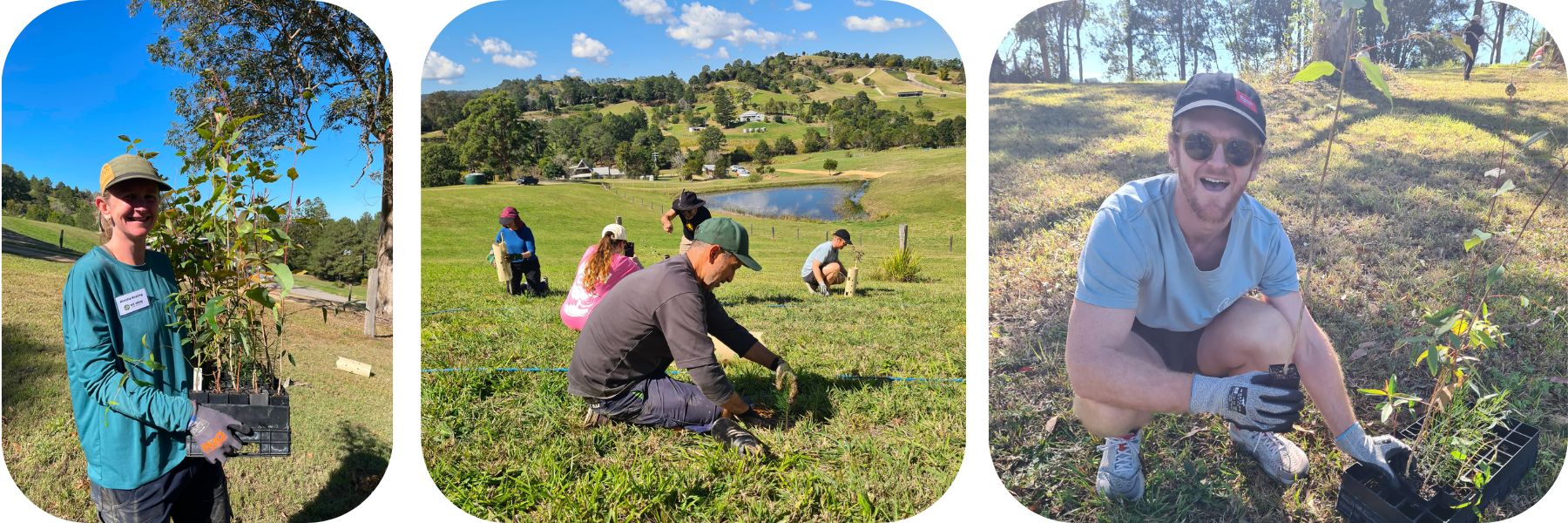
We really love what We Grow Community is doing to facilitate connection between land, community and action. You can find out more about their work at wegrowcommunity.org.
If you join them at one of their planting events, tell them Queensland Koala Crusaders said ‘G’day’!
By Madeleine Coyle